

Everyday conversations form the foundation of our place in a democracy


Democracy is a system founded on the inherent equality and agency of individuals to think, decide for themselves, and participate in collective action.
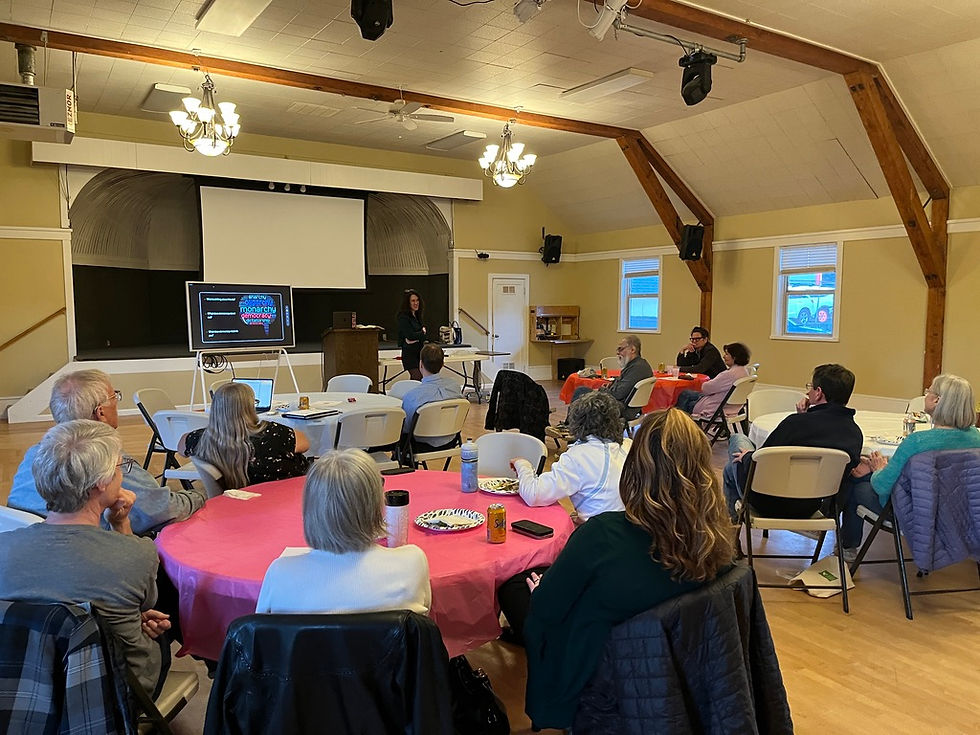
That is one of the points Dr. Yasemin Sari made at the Dinner and Discussion held at the Kenmore Community Club, April 8.
Her talk was the second in a series of discussions the Kenmore Community Club is holding as a way to get community members to gather for a meal and discussion face-to-face to counter the erosion of interpersonal communication posed by social media and artificial intelligence.
While democracy may not always produce the "best" decisions, Dr. Sari said it is uniquely valuable because it requires conversation and public deliberation to establish power.
True democracy relies on the courage of citizens to speak publicly, creating spaces for equal voices that move beyond self-interest toward shared meaning-making. And it starts in the home. Dr. Sari pointed to three types of conversation that form the foundation for democracy.
Family discussion – includes conversation, negotiation, agreement and disagreement
Civic conversation – includes all of those plus meaning making, reflection and deliberation
State debate – includes all the above plus asking questions, critical thinking, and
decision-making
To maintain democracy, citizens must find and utilize specific spaces for equal voices, such as:
Public Parks & Libraries
Community Clubs
Deliberative Forums
Dr. Sari concluded that the courage it takes to practice a more robust, expanded, and effective version of democracy must be fueled by the people themselves, encouraging one another, spurring each other on. She said that, simply by definition—and as proven through the history of democratic governance—that kind of courage cannot be mandated or imposed from above.


